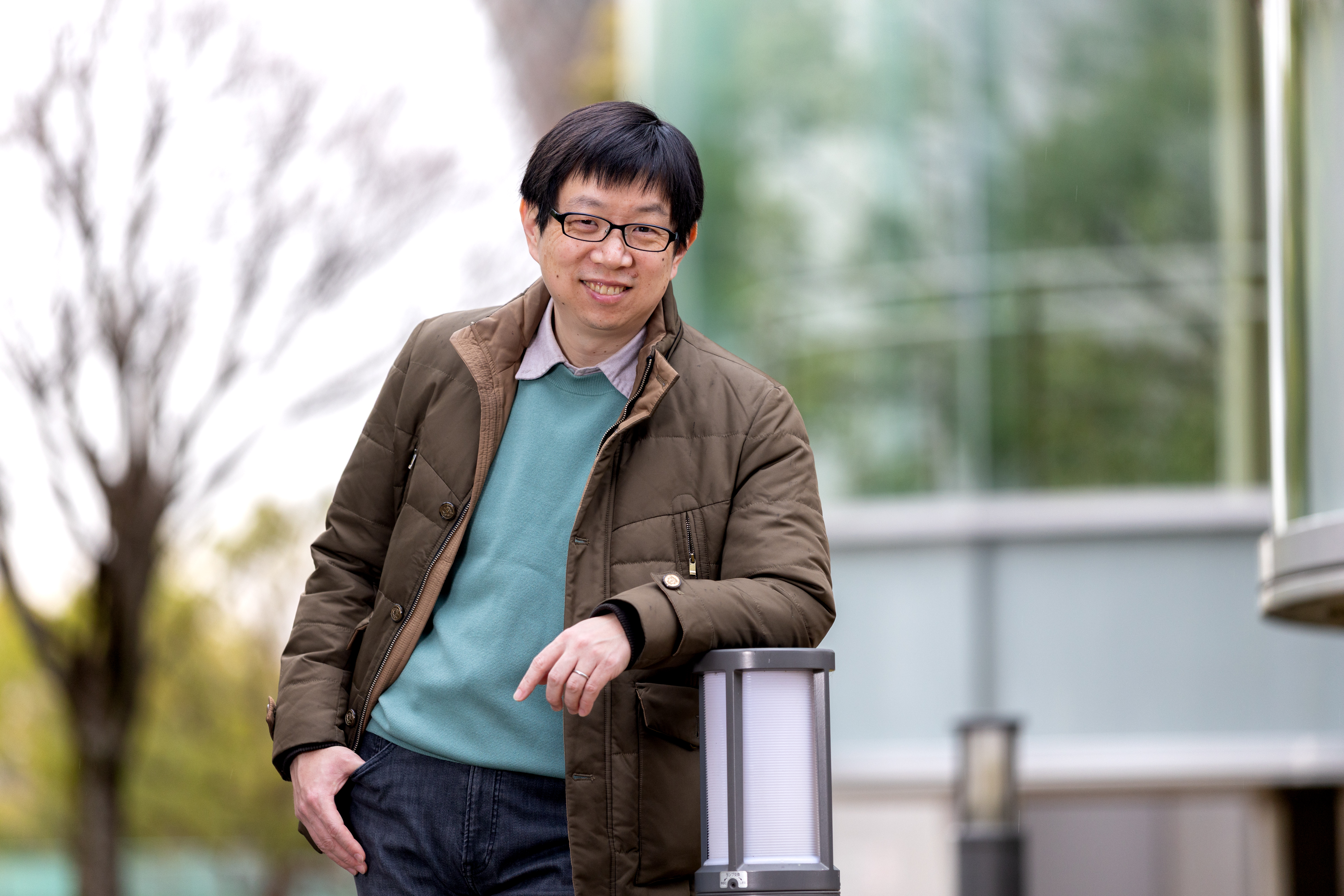
Dr. Yihong Zhang, Graduate School of Information Science and Technology
Living with data: beyond the black box - humanizing AI and social computing
“Social computing is never just about personal preference - it is about understanding the complex social currents that drive our behavior.”
An unexpected path into social computing
Dr. Zhang’s academic journey was driven by a persistent search for the “social” in technology. A transformative moment occurred during his PhD when he encountered research using Twitter data to detect earthquakes. “It was an astonishing paper,” he recalls, noting how it proved that large-scale data aggregation could mitigate the inherent noisy of social media to reveal real-world phenomena.
This fascination with human digital footprints led him from Nanyang Technological University to Kyoto University, and finally to The University of Osaka. For Dr. Zhang, moving from traditional social science—often limited to small participant pools, to analysing millions of tweets in hours opened a new window into understanding modern society. His work now focuses on web mining and recommender systems, aiming to understand how social influence and collective dynamics, rather than just individual interest, shape our decisions.
Rethinking recommendation: social influence vs. personal preference
Dr. Zhang’s research challenges the assumption of recommendation systems: that our clicks and purchases are driven solely by personal interest. “We typically assume that if a user buys a product, it is because they like it,” he explains. “But in reality, consumer behavior is often a response to social influence”. By integrating social behavior and collective trends, such as the influence a popular movie may have over different user groups—into his algorithms, he seeks to create more “scientific” and accurate models.
A critical dimension of his work involves addressing digital polarization. Traditional systems prioritize accuracy, often trapping users in “echo chambers” by recommending content that reinforces their existing views. Dr. Zhang is developing interventions to make these systems less polarized. Furthermore, he is exploring the integration of Large Language Models (LLMs) to enhance recommendations, using them as vast, external knowledge bases. However, he remains cautious, indicating that LLMs “have no problem” with hallucination, often confidently presenting false information that is difficult to detect algorithmically. He also warns that LLMs mirror social biases inherited from human data, a challenge requiring mitigation in future.
Transitions and the Japanese research spirit
Since joining The University of Osaka, Dr. Zhang has been deeply influenced by the “high standard” of Japanese research culture. He recalls a moment of doubt when an experiment failed, only to be challenged by his supervisor: “Are you going to give up?” This persistence, he notes, is a hallmark of the university’s academic environment.
Seven years in Osaka have also shaped his view of communities. He finds a unique parallel between the Japanese railway system and the research culture: both foster a profound sense of trust through their precision and reliability. By combining online data analysis with observations of real-life conversations in local restaurants, he gains a “rich, dual experience” of how Japanese society communicates across both online and offline.
Future vision: transparency and intellectual freedom
Dr. Zhang aims to pull recommendation systems out of the “black box.” He believes the next generation of AI must prioritize transparency and user well-being. He imagined “interactive recommendations” that provide explanations and allow users to communicate back, making the AI experience more comfortable and collaborative. He is also excited to explore the complex dynamics of online purchasing and community formation by incorporating social and seasonal variables into his models. Though difficult, he believes these multidimensional systems will be increasingly valuable as recommendation technology becomes even more pervasive in our daily lives.
At The University of Osaka, Dr. Zhang hopes to foster a culture of curiosity and freedom, epitomized by alumni like Osamu Tezuka. He advocates for a student-driven approach where motivation and intellectual freedom are paramount. His advice to young researchers is to balance personal interest and social value: “Chasing shifting trends like AI may lead to a loss of direction, while focusing solely on one’s own interests risks “overfitting”, leaving a researcher isolated from the society their work is meant to serve”.
Further information: https://researchmap.jp/yihongzhang?lang=en