
Dr. Miso Kim, Graduate School of Humanities
Living translingual world: reimagining identity and power in Applied Linguistics “Language is not a mechanical skill - it is a social practice.”
An Academic journey shaped by language and power
Dr. Miso Kim is Associate Professor (Lecturer) at the Graduate School of Humanities Division of Language and Culture. Her journey into applied linguistics began not in a research laboratory, but while teaching Korean on a volunteer trip to Mongolia. The experience proved transformative. “Learning a new language is like opening a new window to the world,” she recalls. Seeing her students engage with Korean made her realize that language learning was not merely about grammar, but about expanding one’s sense of possibility. That realization led her to pursue graduate studies in applied linguistics, focusing on language, identity, and social participation.
Dr. Kim’s academic interests are deeply connected to her lived experience. Growing up in Daegu, Korea, she felt the pressure to “correct” her regional dialect after moving to Seoul to fit into the social hierarchy. A similar realization occurred after she moved to Osaka in late 2024. When she expressed interest in learning the Kansai dialect, she was told it would make her Japanese “dirty,” a gendered remark implying that women are expected to stick to “standard” Japanese. These encounters with linguistic gatekeeping now drive her research, prompting her to help students critically analyze how dialect, gender, social expectations and power define who truly belongs in a community.
Rethinking language, teaching, and value
Dr. Kim research translanguaging for social justice, challenging the belief that language learning is about mastering a “native” form. She argues that since most global communication in English occurs among non-native speakers, effectiveness depends on meaning-making resources—gestures, tone, attitude, and openness to difference—rather than just grammatical accuracy. This perspective shapes how she views teaching.
Teacher identity matters because it shapes pedagogical philosophy and practice. Citing the idea that “the quality of education cannot exceed the quality of teachers,” she emphasizes that teachers’ lived experiences is vital resources. For instance, a personal encounter with dialect can trigger classroom discussions on linguistic hierarchy, power, and belonging.
Her work also examines how English becomes commodified in neoliberal labor markets in Korea, where standardized test scores often determine educational and professional opportunities. She observes similar patterns in Japan, where English is marketed as a pathway to career success, personal fulfilment, or children’s future advantage. Such representations, she notes, reveal how language is packaged as a symbol of status and mobility.
Transitions and negotiating diversity
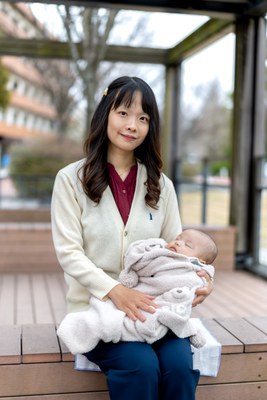
Since joining The University of Osaka, Dr. Kim has navigated significant academic and personal transitions. Moving from a smaller private university in Tokyo to a large national university brought new responsibilities, including mentoring graduate students in a more diverse academic environment. At the same time, living in Osaka with her multicultural family has deepened her engagement with questions of identity and belonging. She operates within multiple linguistic and cultural frameworks daily, and these lived negotiations continually shape her research perspective.
She also sees both potential and challenges in building diversity awareness in English education in Japan. Many students know about Okinawa or Ainu, she notes, yet do not automatically recognize them as “diversity.” In class she often asks, “How many languages are there in Japan?” and then introduces Ethnologue showing far more than students expect, prompting a visible shift in perspective. The challenge is that limited numbers of international students—especially at the undergraduate level—can place undue attention on the few who are present.
Future directions and a vision of belonging
Looking ahead, she aims to expand her work on teacher identity development and the role of emotion in language education. She hopes her work will encourage future teachers—especially in Japan—to move beyond treating English as a purely technical skill. For her, language learning is inseparable from identity, belonging, and social relations; understanding this, she believes, can transform both classroom interaction and students’ sense of who gets to speak—and be heard.
She hopes to cultivate an academic community at The University of Osaka where diversity is not merely acknowledged but actively embraced—a space where multilingual students and scholars feel they belong. Her message to young researchers is clear: “You are already perfect as you are. If you feel there is no seat for you, create your own. There are others like you—you just need to find them.”
Further information: https://researchmap.jp/kimmiso?lang=en