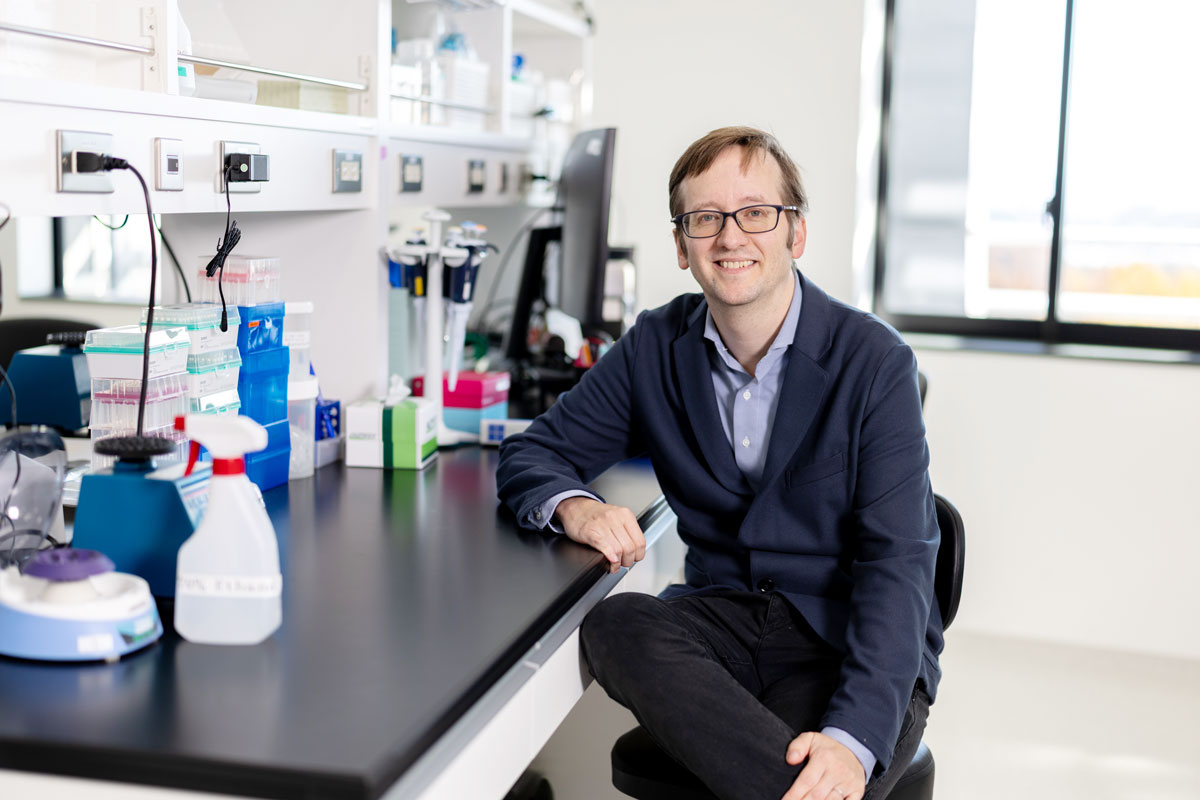
Professor James Wing, Center for Infectious Disease Education and Research
"A scientific journey to Japan's immunology frontier"
Professor James Wing leads the Human Single Cell Immunology Team at the Center for Infectious Disease Education and Research, (CiDER), addressing a critical question: why do individuals show such varied immune responses to infections and vaccines? His laboratory applies cutting-edge mass cytometry and single-cell technologies to dissect these complex individual differences. The team investigates T-follicular regulatory cells and mechanisms of antibody regulation to better understand and control responses to infection, vaccination, and autoimmunity.
Academic journey - encountering Regulatory T cells
Professor Wing’s research path was shaped by the foundational discovery of regulatory T cells by Professor Shimon Sakaguchi (Distinguished Honorary Professor of the University of Osaka), the 2025 Nobel Laureate in Physiology or Medicine. After completing his PhD and post-doctoral research at the University of Sheffield, UK, Professor Wing moved to Japan in 2010 on a JSPS fellowship. This allowed him to join Professor Sakaguchi’s laboratory and build directly upon his pioneering work.
His early work provided critical insights into B cell function. He reflects, "I was originally working on vaccine responses, combining microbiology and immunology with a focus on bacteriology, more specifically, Neisseria species. During my postdoctoral research, my focus shifted to vaccine-related T cells. During this time, I became interested in how B cells are regulated. It was clear that the regulatory T cells, or Tregs, discovered by Professor Sakaguchi played a role in controlling B cells, which are the key antibody producers for antiviral responses, yet the mechanism was still unknown. Prompted by this, I reached out to Professor Sakaguchi to pursue research on Treg control of B cells. Through a JSPS fellowship, which allowed me to embark on that journey in Japan."
During a decade of research under Professor Sakaguchi’s mentorship, Professor Wing investigated how Tregs, and particularly T-follicular regulatory cells (Tfr), control antibody production and prevent autoimmunity. His work helped define Tfr biology in both mice and humans, revealing their migration to B cell follicles and essential role in regulating germinal center responses. This foundational research positioned him to address urgent questions during the COVID-19 pandemic.
COVID-19 - challenges and scientific Advances
The establishment of Professor Wing's lab at CiDER coincided with the COVID-19 pandemic. Global mobility restrictions made it difficult to recruit researchers, yet the crisis sharpened the lab’s focus on the role of Tregs and antibody regulation in infectious diseases.
Professor Wing’s team has significantly advanced the research with a single-cell technique, which allows researchers to examine immune cells in detail. In a recent study they achieved a pivotal discovery in patients with severe infectious diseases including COVID-19 that early precursors of a specific Treg subset, Tfr, were severely depleted [1].
Professor Wing mentions, “Our research found that during a viral infection, Tfr cells, particularly their early precursors, are lost from the blood. This loss coincides with a harmful increase in auto-antibodies, which attack the body's own tissues. We believe this auto-antibody production is triggered by the depletion of Tfr cells, contributing significantly to the damage caused by the virus. This entire destructive process appears to be driven by the strong inflammation a person experiences during the infection.”
For Treg and Tfr related work, Professor Wing still collaborates with Professor Sakaguchi. “I continue to work closely with Professor Sakaguchi on Treg biology while also developing new methods to understand how Tregs influence many immune cell types at once. Human immunology offers direct relevance to disease, yet it is often difficult to determine how different cells affect each other. This motivated us to build better in-vitro models that reveal Treg function, compare their suppressive strength, and test clinically used immunomodulatory drugs such as anti-CTLA-4 or anti-PD-1 [2]. These approaches help clarify how treatments reshape immune regulation.”
Bridging cultures, advancing immunology
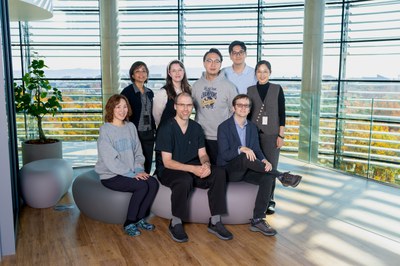
“Moving from the UK to Japan naturally came with challenges, especially the language barrier, but working in an English-speaking research environment helped greatly. Japan is a comfortable and safe place to live, and I’ve come to appreciate its more subtle, unspoken cultural style, which felt surprisingly familiar to me as a British scientist. Ultimately, adapting to a new country depends on personal flexibility, but for those willing to embrace a different environment, Japan, and The University of Osaka in particular, offers an excellent setting for scientific work.”
[1] Tulyeu, J., et al. Human precursor T follicular regulatory cells are primed for differentiation into mature Tfr and disrupted during severe infections. Sci. Adv. 11, eadv6939 (2025). DOI: 10.1126/sciadv.adv6939
[2] Søndergaard, J.N., et al. Single cell suppression profiling of human regulatory T cells. Nat Commun 16, 1325 (2025). https://doi.org/10.1038/s41467-024-55746-1
For further information: https://www.winglaboratory.com/