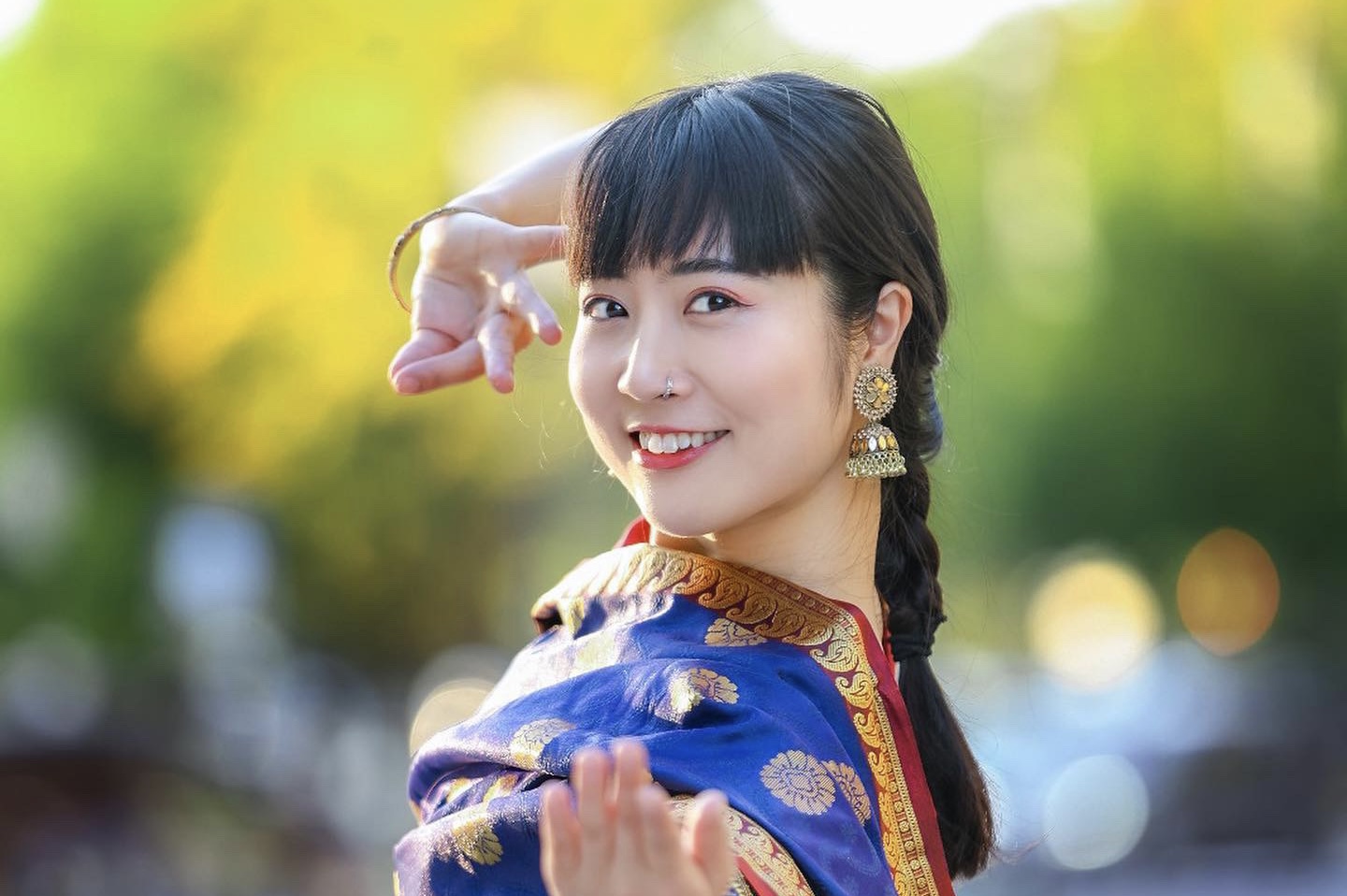
Ms. Mayo Hitomi, Mayo Japan
Hard work never fails - building a bridge between Japan and India through YouTube
An alumna Ms. Mayo Hitomi, better known as mayo, is emerging as one of the most influential voices connecting Japan and India in the digital age. A graduate of the Hindi major in the School of Foreign Studies, she spent a year studying in Delhi before beginning her career at a global consulting firm. She launched her YouTube career in 2017 and went on to found JAI Anime in 2022, a company dedicated to helping Japanese content reach audiences in India.
Today, as a prominent influencer, she works across a wide range of fields, from video creation and media appearances to seminars and event hosting. With her signature smile and fluent Hindi, mayo brings Japan to Indian audiences in a way few others can. She introduces Japanese cities and cuisine with warmth and energy, speaks passionately about India, and dives into Indian street food with infectious enthusiasm. In interviews with the director and cast of the globally celebrated Indian blockbuster RRR, she even captivated viewers with her own dynamic dance performance.
She currently runs three YouTube channels, including Mayo Japan, her flagship channel for Indian audiences, which has grown to more than 3.9 million subscribers. Widely embraced by Hindi speakers, mayo is active in both Japan and India as a cultural bridge between the two nations. Through her content, she shares the realities, charms, and everyday richness of contemporary Japan and India with the world.
Discovering Hindi and developing a connection with India
As a child, mayo dreamed of becoming a ballerina. After high school, she had considered studying ballet overseas. However, she recalls, “When I was in my second year of high school, I realized there were so many people better than I was. So I gave up ballet and shifted my focus to university.”
There was little time to dwell on the loss of that dream. Determined to step out into the world and immerse herself in cultures beyond her own, she set her sights on the School of Foreign Studies at The University of Osaka. When choosing a language, she relied on three clear criteria: it had to be relatively rare, spoken by a vast number of people, and linked to a country with strong growth potential. “Hindi checked every box,” she says.
Although her decision was initially a rational one, she soon began to wonder whether that alone would sustain her motivation. To deepen her engagement, she made a conscious effort to enjoy the language in everyday life. In addition to her coursework, she watched Indian films and worked part-time at a restaurant run by Indians. Through these experiences, she gradually developed a strong affection not only for Hindi, but also for India itself.
That growing attachment led her to India in her third year of university, when she spent a year studying abroad in Delhi. She had looked forward to the experience, but the reality was far more intense. “To be honest, studying abroad there was very difficult,” she says candidly. “I loved the people and the language, but I struggled with the harsh living conditions and the extreme heat.”
It was a challenging year, but also a transformative one. The experience sharpened her resilience, broadened her perspective, and ultimately helped shape her path after graduation. Returning to Japan with a stronger sense of purpose, she joined a global consulting firm.
Turning life experience into a cross-border career
mayo began posting videos on YouTube during her first year at the company, launching her career as a creator while working full-time. At first, her goal was simple: not to lose the Hindi she had worked so hard to acquire. She began by uploading language-learning videos for Japanese viewers. Then one comment changed everything. A viewer wrote to her in Hindi, “Could you make Japanese lesson videos for Indians?” That single request became the spark that launched her Hindi-language content for Indian audiences.
“At first, I thought I would make videos explaining Japanese,” she says. “But that turned out to be difficult. In the end, I shifted to introducing Japanese culture in Hindi.” While balancing life as an office worker, she continued posting consistently. The breakthrough came in 2019, when a video featuring the Holi Festival in Tokyo’s Nishi-Kasai district went viral for the first time. “It was such a striking scene, people throwing bright powders at one another, yet it was happening in Tokyo,” she says. “I think that unexpected contrast really drew people in.” From there, the momentum only grew. Even after leaving her corporate job to pursue YouTube full-time, her audience continued to expand. Today, her main channel boasts more than 3.9 million subscribers.
“First, there’s ballet,” she says. “I love performing in front of people, so I genuinely enjoy what I do now. And in order to work as an influencer, collaborating with companies and government agencies is essential. What has helped me enormously are the business manners and professional mindset I gained during my years in the corporate world. When people think, ‘We can trust mayo with this,’ I believe that comes from those experiences. Looking back, I feel that nothing in my life has gone to waste.”
The mindset she developed at university continues to shape her as well. “The School of Foreign Studies was full of people with incredible freedom of spirit,” she says. “It was completely normal for students to take time off to study abroad or devote themselves to mastering a niche language. Even if you are different from others, you should pursue what you truly want to do. That way of thinking still supports me today.”
Building a bridge through “People-to-People Diplomacy”
At the heart of her work is a principle she describes as “people-to-people diplomacy.” For her, being an influencer is not simply about visibility or virality. It is about responsibility. “There is still so much about India’s unique culture and way of thinking that I do not fully understand myself,” she says. “A casual remark from me could potentially harm the relationship between India and Japan. I always remind myself that my words and actions are part of a form of people-to-people diplomacy, and I try to approach them with care and responsibility.”
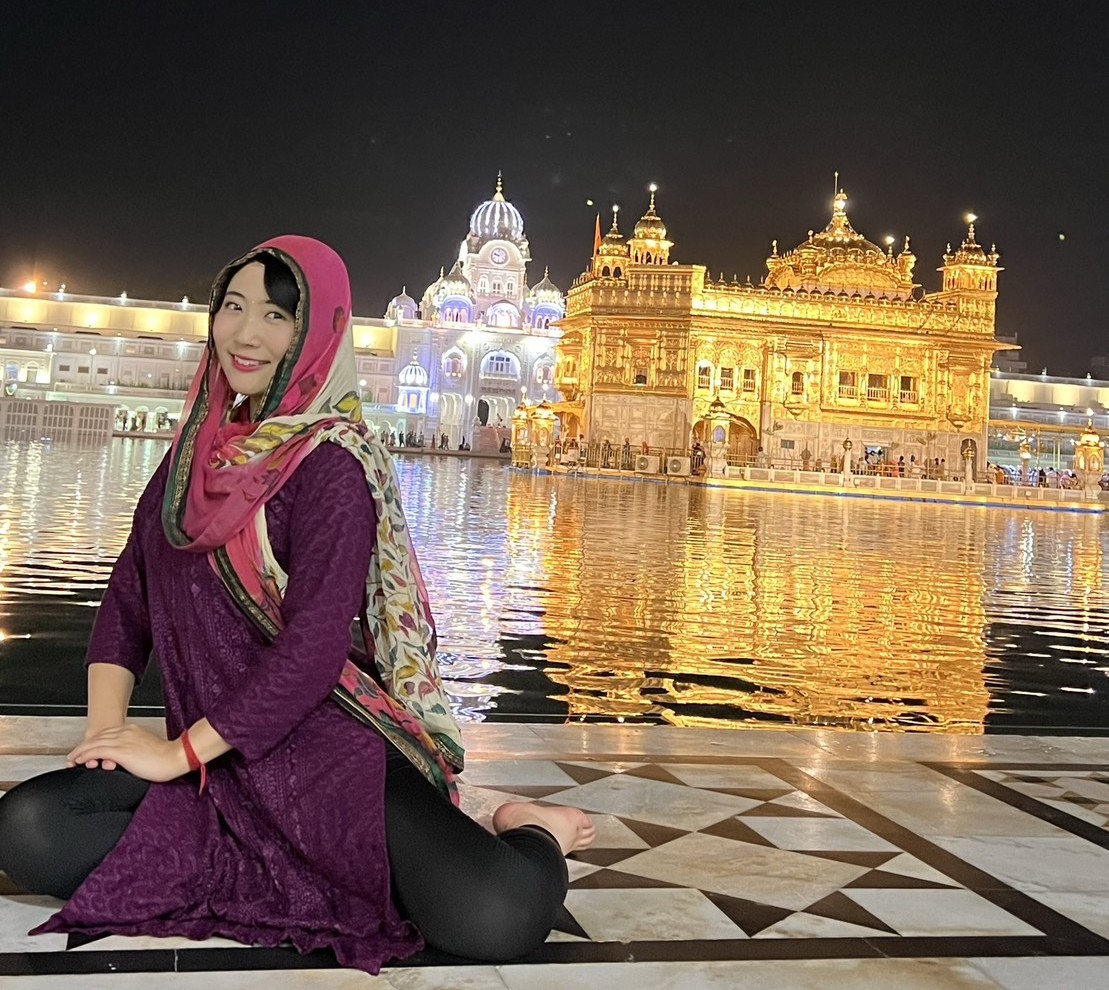
That sense of mission sets her apart. She is not simply chasing clicks or trends; she is working to close the distance between two countries that still often misunderstand one another. Her ambitions also extend beyond life in front of the camera. “In the future, I may start a PR company, work with influencers, and become more involved on the management side,” she says.
But whatever form her career takes next, her ultimate goal remains unchanged: to bring Japan and India closer together. “I believe there are still many misunderstandings between the two countries,” she says. “In Japan, India is often seen negatively, as dirty or poor. On the other hand, many Indians tend to see only the positive side of Japan. By introducing each country’s daily life, culture, and entertainment, I want to show what Japan is really like today and what India is really like today.”
One Hindi phrase has long guided her journey: “Koshish karne walon ki kabhi haar nahin hoti, ” which means “Those who continue making an effort never truly lose.”
Behind her warm presence on screen lies a steady commitment to building understanding between people.