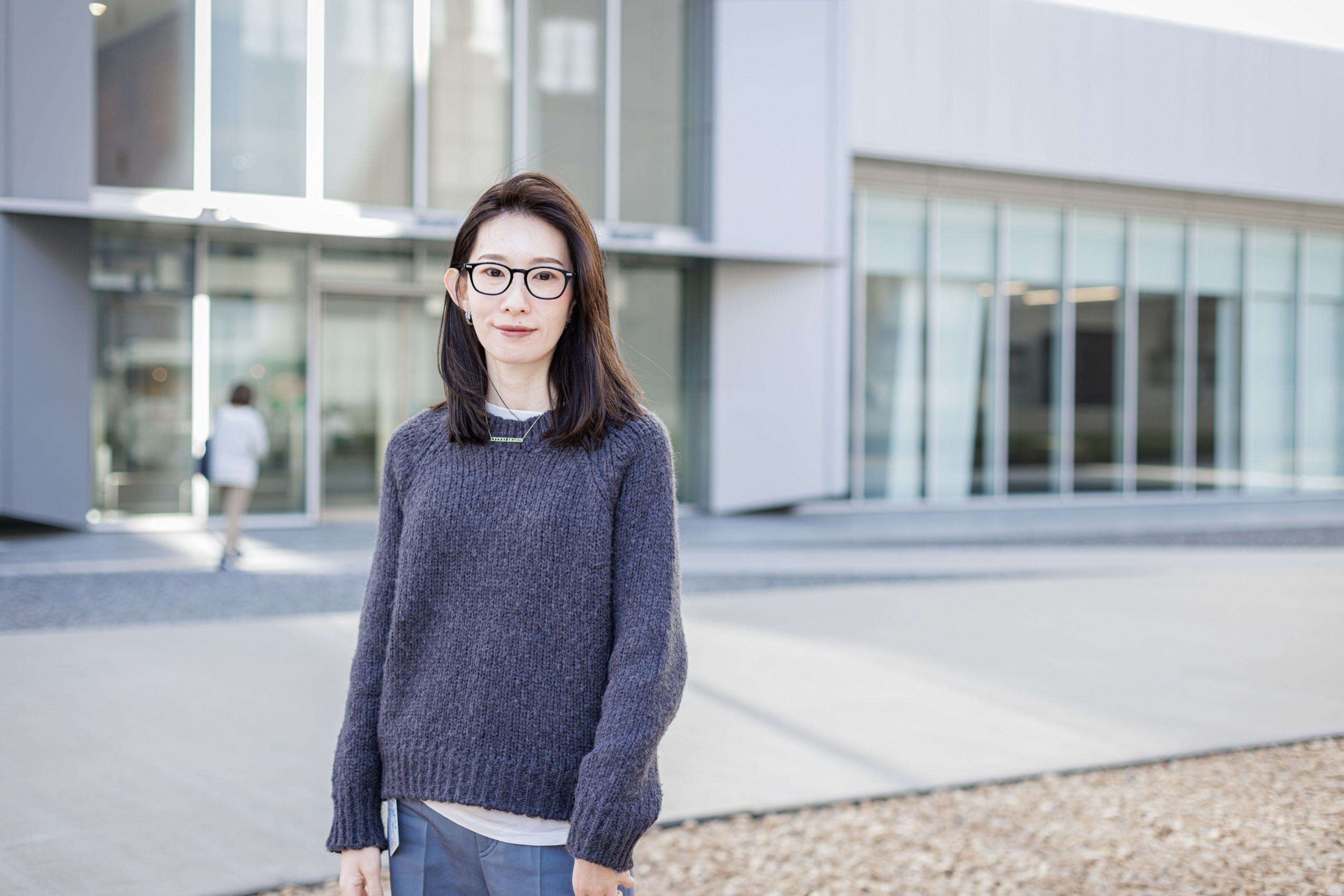
Laboratory Head, Yuka Maeda, National Cancer Center Research Institute
"Carrying the torch: A Nobel legacy guiding discovery toward real benefit for patients"
A leading tumor-immunology researcher at the National Cancer Center Research Institute (NCC), Dr. Yuka Maeda earned her doctorate at The University of Osaka under Distinguished Honorary Professor Shimon Sakaguchi, the 2025 Nobel laureate in Physiology or Medicine. As a postdoctoral research fellow, she continued her work at Memorial Sloan Kettering Cancer Center in New York, widely regarded as the epicenter of tumor immunology research, where the world’s first cancer immunotherapy was developed. Today, she tackles the elusive “equilibrium phase” at the core of the cancer immunoediting theory—long hypothesized yet never fully defined in humans. At the same time, she works to translate scientific insights into patient benefit as a board member of a drug-development venture.
A mentor’s triumph and the origins of a research journey
Dr. Maeda vividly recalls witnessing the announcement of Prof. Sakaguchi’s Nobel Prize via a live video stream at her institute. “I always believed he would receive it one day, but when I actually heard his name, I truly jumped out of my seat,” she mentions. What surprised her most was that the award recognized the fundamental science behind immune tolerance mediated by regulatory T cells (Tregs)—a discovery with profound implications for therapy, but still deeply rooted in basic biology. “The committee’s confidence in its translational potential felt enormous.”
Her motivation to enter cancer research dates back to her mother’s breast cancer diagnosis during her undergraduate years. Although treatment was successful, the constant fear of recurrence left a deep imprint. “I thought that if I studied cancer myself, I could better understand the disease and the latest treatments.” Originally a student in medical engineering researching artificial heart–lung systems, she shifted paths in 2008 and knocked on the door of Japan’s leading cancer immunology laboratory.
A groundbreaking Science paper born from serendipity
Professor Sakaguchi’s mentorship was famously rigorous. He always examined raw data closely and pinned notable results on his desk. “Seeing my data displayed there was incredibly motivating,” Dr. Maeda says. “Even tiny clues sparked deep, rigorous feedback, reflecting his sincere commitment to young researchers.”
Their collaborative work culminated in a 2014 Science paper, which was the first human-based study in the lab demonstrating that CD4⁺ Tregs induce a stable state of immune unresponsiveness (anergy) in self-reactive CD8⁺ T cells to prevent autoimmune responses [1]. “Our key finding in Science was a serendipitous discovery. While demonstrating Treg suppression assays to a MD student, I loaded multiple parameters into the experiment at once, inadvertently generating critical data on antigen-related surface molecule expression,” Dr. Maeda explains.
But the road that followed was not always easy: human Treg studies required large volumes of donor blood and significant emotional resilience when experiments failed. “During the toughest periods, Professor Sakaguchi would quietly ask, ‘Are you doing okay?’ That gentle concern kept me going.” This groundbreaking study enabled her to complete her doctorate ahead of schedule and paved the way to Memorial Sloan Kettering Cancer Center in New York—connections that now form the backbone of her international network.

Bridging scientific theory and patient impact
Today Dr. Maeda is also an adjunct associate professor at Kyoto University. She investigates the elusive equilibrium phase of cancer immunoediting, aiming to model it in humans through regulatory T cells and provide definitive proof—an endeavor she views as her life’s work. In 2022, she co-founded ARC Therapies Inc., an NCC-certified venture dedicated to turning discovery into patient benefit. Preparing for early clinical trials, the company relies on trust-based collaborations. “Researchers often treat publication as the finish line, but knowledge matters only when it reaches patients,” she notes, emphasizing that in the “valley of death,” human networks are indispensable.
The irreplaceable value of human connection
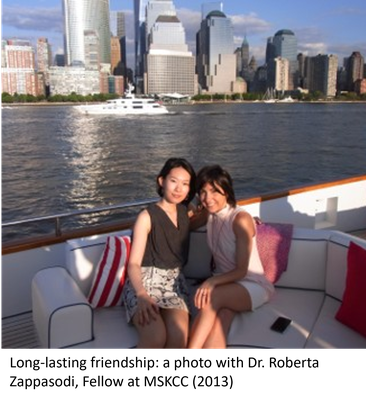
Amid the rise of AI, Maeda believes face-to-face relationships matter more than ever. Her former colleagues now include senior editors at major journals such as Nature, who still call her “family.” She says, “Japanese researchers often struggle because they lack direct ties with editors and global peers. Meeting people, exchanging ideas, and pushing together toward solutions—these are priceless assets.”
To young scientists, she offers clear advice: “Use your most flexible years to go abroad. The diversity of people you meet will become your greatest lifelong asset. Opportunities come to those who stay open—and when they appear, seize them with both hands.”
[1] Yuka Maeda et al. Detection of self-reactive CD8+ T cells with an anergic phenotype in healthy individuals. Science 346,1536-1540(2014). DOI:10.1126/science.aaa1292
For further information: https://researchmap.jp/ym_research?lang=en